 Skip to content
Plasma Fibroblast in Baton Rouge, LA
Collagen Remodeling From Within in Baton Rouge, LA ·
Led
by Samantha Avera, DNP-BC
There is a category of skin laxity: the softening of the upper eyelid, the looseness along the jawline, the crepiness that develops around the mouth over the years, where patients want meaningful skin tightening treatment but aren’t ready for surgical intervention. Plasma fibroblast occupies that space deliberately. It uses controlled plasma energy to create precise, superficial micro-injuries in the skin that trigger fibroblast activity and collagen contraction, producing genuine non-surgical skin tightening without incisions, general anesthesia, or the recovery required by surgery.
At Coco Beauty Bar & Medical Spa, every fibroblast skin tightening in Baton Rouge, LA, begins with an honest assessment of whether this is appropriate for your specific concern and skin type. Samantha Avera, DNP-BC, brings a decade of clinical experience to that evaluation, including a clear-eyed view of what plasma fibroblast achieves well and where a different approach would serve you better.
Our Approach: Precision. Candidacy. Honest Outcomes.
Plasma fibroblast is an effective skin-tightening treatment for the right concern on the right candidate. It is not a universal skin-tightening solution, and a provider who presents it as such isn’t giving you the full picture. Patient selection, treatment depth, and aftercare all determine whether the results are meaningful and the healing process proceeds smoothly. Samantha Avera’s approach to plasma fibroblast is the same as her approach to every treatment: a thorough assessment before any recommendation, and a complete explanation of what the process involves before you commit to it.
Full Skin Assessment
Every consultation includes a detailed evaluation of skin laxity, skin tone, the specific area of concern, and your treatment history before any recommendation is made.
Candidacy First
It produces the most reliable results in patients with lighter Fitzpatrick skin types (I–III). In patients with medium-to-deep skin tones, the risk of post-inflammatory hyperpigmentation is elevated and warrants careful discussion before proceeding. Samantha Avera addresses this directly at every consultation.
Conservative Treatment Depth
Results from plasma fibroblast are determined by the density and depth of energy application. Starting conservatively, assessing the outcome, and building from there protects your skin and ensures the healing process is manageable.
Long-Term Skin Health
Post-treatment skincare and sun protection are not optional additions; they are part of the treatment. How the skin is supported during healing directly affects the outcome and the longevity of the tightening achieved.
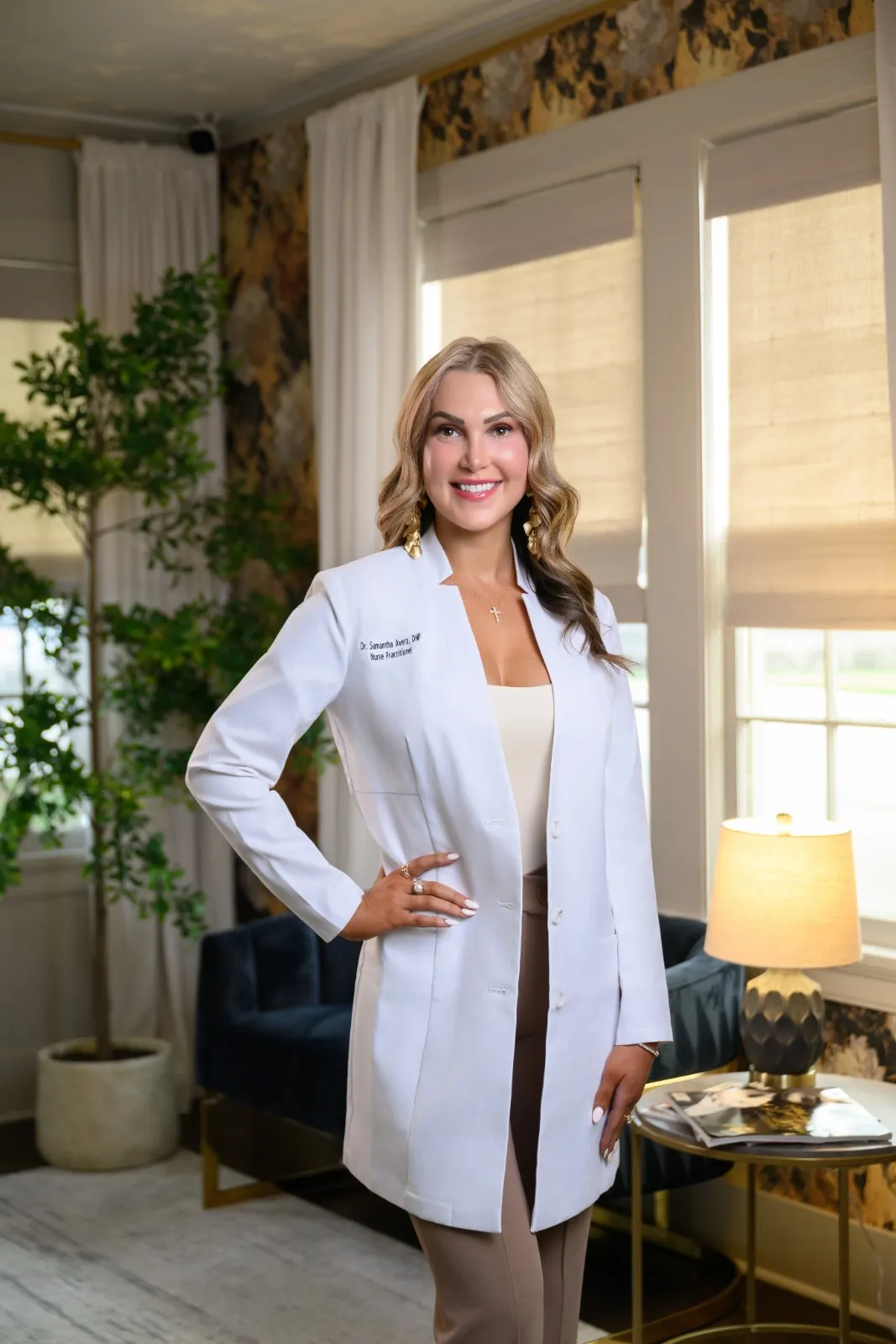
Samantha Avera, DNP-BC
Samantha Avera brings an advanced clinical perspective to plasma fibroblast treatment, shaped by her background in critical care, dermatology, and luxury medical aesthetics. Rather than approaching non-surgical skin tightening treatment as a trend-driven procedure, Samantha Avera evaluates each patient through the lens of skin physiology, safety, candidacy, and long-term outcomes, including when the treatment may not be the right fit.
Her consultations are centered on transparency, education, and individualized planning. Patients leave with a clear understanding of the treatment process, expected recovery, realistic results, and whether this genuinely aligns with their skin concerns and goals.
- Doctor of Nursing Practice, Board Certified, with subspecialty training in aesthetic and functional medicine
- 10+ years of clinical experience spanning critical care, dermatology, and luxury medical aesthetics
- Advanced specialization in energy-based treatments, injectables, biostimulants, and PRP/PRF therapy
- Evidence-based, individualized treatment planning with extensive experience treating diverse skin tones and complex skin concerns
How Does Plasma Fibroblast Work?
The device generates a small electrical arc (plasma) between the device tip and the skin surface. The plasma creates a controlled point source of superficial thermal energy that sublimes a tiny area of the epidermis without direct contact with the skin.
This thermal stimulus triggers fibroblast activation in the dermis, the cells responsible for producing collagen and elastin, while simultaneously causing the surrounding skin to contract. The result is a combination of immediate tissue tightening and gradual collagen remodeling in the weeks and months that follow.
The Carbon Dot Pattern
Treatment creates a grid of small carbon dots on the skin surface, each representing a point of energy delivery. These dots crust over and shed within 7 to 14 days as the skin underneath heals. The spacing and density of the dot pattern are what determine both the degree of tightening and the extent of the healing process. A denser pattern produces more significant tightening but requires more recovery. Samantha Avera selects the pattern based on the area being treated and your specific goals.
Collagen Contraction and Remodeling
The immediate tightening observed after treatment reflects collagen contraction induced by the thermal stimulus. The longer-term improvement, lasting 3 to 6 months, reflects new collagen synthesis by activated fibroblasts in the dermis. This dual response is what produces results that improve progressively rather than appearing fully on the day of treatment and then fading.
Commonly Treated Areas
Upper eyelid laxity
Lower eyelid and under-eye area
Perioral lines and lip area
Neck and jawline
Nasolabial folds
Décolleté and hands
Stretch marks
A Note on Plasma Fibroblast in South Louisiana's Climate
Baton Rouge’s UV environment makes post-treatment sun protection a particularly important consideration for non-surgical skin tightening treatments. The carbon dots created during treatment are vulnerable to UV exposure during the healing period. Sun contact on active treatment sites can cause hyperpigmentation that is difficult to resolve and may persist for months. In a city that averages over 214 sunny days annually with UV index values regularly reaching 10 or above from April through October, this is not a theoretical risk. Samantha Avera builds sun protection planning into every consultation and aftercare conversation.
Timing treatment during lower-UV months, November through February in Baton Rouge, reduces the burden of sun management during the critical healing window. Patients with active outdoor schedules, regular I-10 and I-12 commutes, or frequent attendance at LSU games and outdoor festivals are counseled specifically on timing and protection during the post-treatment period. You can look at the LSU Athletics Tiger Stadium Policies to see the sheer scale of their outdoor, open-air events where patients would need that intense sun protection.
- You notice eyelid hooding or drooping that makes you look tired or older than you feel
- The skin around your mouth, neck, or eyes has a crepiness or looseness
- You want skin-tightening results with a non-surgical option
- You have a lighter skin tone (Fitzpatrick I–III)
- You've researched plasma fibroblast online and want a candid clinical assessment
The Difference Between Plasma Fibroblast Done Well and Done Carelessly
Plasma fibroblast has a mixed reputation online because it has been marketed and delivered without sufficient attention to candidacy, skin tone assessment, and aftercare. In patients with medium to deeper skin tones, insufficient pre-treatment evaluation frequently produces post-inflammatory hyperpigmentation that takes months to resolve.
In patients with too much laxity for the treatment to address, results are underwhelming, and the recovery feels disproportionate. Good outcomes depend entirely on appropriate patient selection and honest expectations.
What we don't do
Treat patients at elevated risk of hyperpigmentation without a thorough candidacy conversation. Overstate what it can achieve for significant laxity. Minimize recovery to make the treatment sound more accessible than it is.
What we do instead
Evaluate candidacy honestly before recommending treatment. Explain the recovery process clearly, including what the carbon dots look like, how long they take to resolve, and what sun protection is required. Recommend an alternative when a different approach would better serve you.
Regarding skin tone
It carries a meaningful risk of hyperpigmentation in patients with Fitzpatrick skin types IV and above. Samantha Avera addresses this directly at every consultation and will not proceed without a complete understanding of the risks involved by both parties.
What to Expect at Coco Beauty Bar & Medical Spa
1
Your Consultation
Samantha Avera evaluates your skin tone, the area of laxity, your treatment goals, and your ability to manage recovery and meet sun protection requirements. Candidacy, realistic outcome, and the full healing process are discussed before any decision is made.
2
Your Custom Treatment Plan
Dot density, pattern, and energy settings are determined based on the area being treated, your skin type, and your goals. For the upper eyelid specifically, Samantha Avera maps the treatment zone carefully to achieve a natural lift without overcorrecting.
3
Treatment Day
A topical anesthetic is applied for 45 to 60 minutes before treatment. The plasma device delivers precise energy points across the treatment area, creating the characteristic carbon dot pattern. Mild swelling is normal immediately after, particularly around the eyes, where swelling may be more pronounced for the first 24 to 48 hours. The dots crust and shed over seven to fourteen days. Sun avoidance during this period is essential.
4
Results & Ongoing Care
Tightening is visible as the skin heals, with continued improvement over three to six months as collagen remodeling progresses. Most patients achieve their results in 1 to 2 sessions. Consistent sun protection afterward is not optional; it protects both the outcome and the skin’s long-term health.
What Our Patients Are Saying

Samantha did an amazing job. She did exactly what we spoke about in my consult. It was a faster and less painful experience than I was expecting. Absolutely will recommend her to others!
I went today and saw Samantha. She is AMAZING and so good at what she does. She really listens to her patients and answers all the questions (I had A LOT!). Everyone at Coco is so very sweet and inviting! Thank you so much for a wonderful experience!
Frequently Asked Questions
Is plasma fibroblast safe for all skin tones?
It is most appropriate for Fitzpatrick skin types I–III; patients with medium-to-deep skin tones face an elevated risk of post-inflammatory hyperpigmentation, which warrants careful evaluation before proceeding.
How long is the recovery?
The carbon dot crust forms and sheds over seven to fourteen days; most patients are comfortable in social settings by day ten to twelve. Swelling around the eyes is most pronounced in the first 24 to 48 hours. Sun avoidance is essential throughout the healing period.
When will I see the results?
Initial tightening is visible as the skin heals over the first two weeks; collagen remodeling continues to improve the result for three to six months. The most significant improvement is often apparent at six to eight weeks, with gradual continued improvement through three to six months.
How does plasma fibroblast compare to surgical blepharoplasty for eyelid laxity?
It produces meaningful improvement for mild to moderate eyelid hooding; surgical blepharoplasty is more appropriate for significant laxity or skin excess that exceeds the plasma energy’s reach.
Is it painful?
Most patients find the treatment very manageable with a topical anesthetic applied 45 to 60 minutes beforehand. The sensation during treatment is typically described as brief, intermittent heat at each energy point.
How many sessions will I need?
Most patients achieve their desired result with one session; a second session may be appropriate for more significant laxity or to refine the outcome after full healing. Samantha Avera assesses the full result at three months before recommending any additional treatment.
Will I still look like myself?
Yes, it tightens and lifts; it does not alter facial structure or expression. The goal is skin that looks more rested and naturally lifted, not a result that announces itself. Samantha Avera’s conservative approach to dot density and pattern means the outcome reads as refreshed rather than treated.
Your Consultation Begins With a Conversation
Plasma fibroblast in Baton Rouge, LA, is an effective treatment for the right patient with the right concern, and a consultation is the only way to determine whether that describes you. Samantha Avera will evaluate your skin honestly, explain what the treatment can and can’t achieve, and give you a complete picture of the recovery and sun-protection requirements specific to Baton Rouge’s climate.
Coco Beauty Bar & Medical Spa · Baton Rouge, Louisiana.
Individual results vary. All treatments are performed under the supervision of Samantha Avera, DNP-BC.
Quality