 Skip to content
Microneedling & Microneedling with PDRN in Baton Rouge, LA
Collagen Induction Therapy in Baton Rouge, LA ·
Led
by Samantha Avera, DNP-BC
Microneedling in Baton Rouge, LA, works on an elegantly simple principle: create a controlled stimulus, and the skin’s own repair process does the rest. SkinPen® delivers thousands of precise micro-channels into the skin at a depth calibrated to your specific concern, activating the collagen induction and elastin production that smooth texture, soften scarring, and gradually restore the quality and firmness that accumulated sun exposure and time have quietly changed. No heat, no harsh chemistry, and no disruption to the skin’s surface pigment, which is why it works across every skin tone.
Every session at Coco Beauty Bar & Medical Spa begins with a skin assessment by our licensed medical aestheticians under the clinical oversight of Samantha Avera, DNP-BC, so the treatment selected and the depth delivered are genuinely matched to your skin. For those whose concerns go deeper—more established scarring, chronic textural irregularity, or skin that hasn’t responded to surface-level treatments. We also offer PDRN microneedling in Baton Rouge, LA. This regenerative skin repair treatment amplifies the healing response initiated by the micro-channels.
Two Levels of Treatment. One Shared Principle.
SkinPen® microneedling is FDA-cleared for acne scar microneedling and clinically validated for improving skin texture, tone, and overall skin rejuvenation through controlled collagen induction therapy. The SkinPen®’s precision-engineered tip creates microchannels at a precise, consistent depth, the kind of control that determines whether results are meaningful or superficial. Most sessions take 30 to 45 minutes, and because there is no thermal component, the risk of post-inflammatory hyperpigmentation is significantly lower than with heat-based resurfacing devices.
PDRN microneedling takes that foundation further. PDRN (polydeoxyribonucleotide), sometimes called a salmon DNA facial due to its nucleotide origin, is a regenerative compound applied immediately after micro-channeling, when the skin’s permeability is at its peak. The compound penetrates the dermis and signals tissue repair, hydration, and collagen synthesis at a depth that topical application alone cannot reach. For patients dealing with deeper scarring, persistent discoloration, or skin that needs more than collagen induction alone, it extends what microneedling can accomplish.
What Microneedling Does for Your Skin
Softer acne scarring and controlled micro-injury initiate collagen remodeling that gradually fills and smooths atrophic scars over a series of acne scar microneedling sessions.
More even texture and tone; cellular turnover is accelerated; and surface irregularities, enlarged pores, rough patches, and post-inflammatory marks progressively refine.
Firmer, more resilient skin, along with new collagen and elastin deposited in the dermis over the weeks following each session, improves skin density and its ability to hold its shape.
Progressive improvement builds with each session and continues to develop for weeks afterward. Most patients complete three to four sessions spaced four to six weeks apart, then maintain the sessions seasonally.
Who Microneedling Is For?
SkinPen® is appropriate for all skin tones, including Fitzpatrick types IV through VI, which makes it one of the more universally accessible treatment options at Coco. If you have a concern about skin quality, texture, or early structural changes, it is worth a conversation.
Microneedling with PDRN is particularly well-suited for patients with more established scarring, persistent discoloration, or those who want to support the healing response more actively. The consultation will clarify which protocol or series makes the most sense for your specific skin.
Acne scarring, atrophic scars, including rolling, boxcar, and post-inflammatory texture change.
Uneven skin tone and surface discoloration that hasn't responded to topical treatment alone.
Fine lines and early textural change around the eyes, mouth, or forehead.
Overall skin quality, dullness, congestion, and the gradual loss of firmness are accelerated by South Louisiana's UV environment.
Patients wanting a non-ablative option with a manageable recovery window.
Made for South Louisiana Skin
Baton Rouge’s UV environment, with over 214 sunny days annually and UV index values regularly reaching 10 or above from April through October, accelerates the collagen breakdown and textural changes that it is specifically designed to address. The post-acne scarring, enlarged pores, and gradual loss of skin density that patients notice in their 30s and 40s are often the result of a combination of genetic and environmental factors. A consistent skin rejuvenation treatment rebuilds the structural foundation that climate and time wear down.
Fall and winter are the most practical times to begin a microneedling series in Baton Rouge. UV intensity drops after the LSU tailgate season, and the skin is less reactive after months of heat and humidity. Because advanced tissue-remodeling treatments, such as the radiofrequency microneedling methods outlined in inRegister Magazine, require dedicated daily protection and a controlled post-care environment, this cooler climate makes managing your recovery much easier. Furthermore, the three-to-four-month window between sessions can be completed before the next UV season intensifies, and your aesthetician will build the series timeline around your calendar and your skin’s response.
Samantha Avera, DNP-BC
Every collagen induction therapy at Coco is performed by our licensed medical aestheticians in a medical spa setting under the oversight of Samantha Avera, whose background in critical care, dermatology, and luxury medical aesthetics shapes the clinical standard for every service we offer.
Her oversight ensures that treatment depth, device settings, and the use of PDRN are determined by clinical judgment rather than a default protocol, and that patients whose skin concerns indicate a need for medical-grade intervention are guided accordingly.
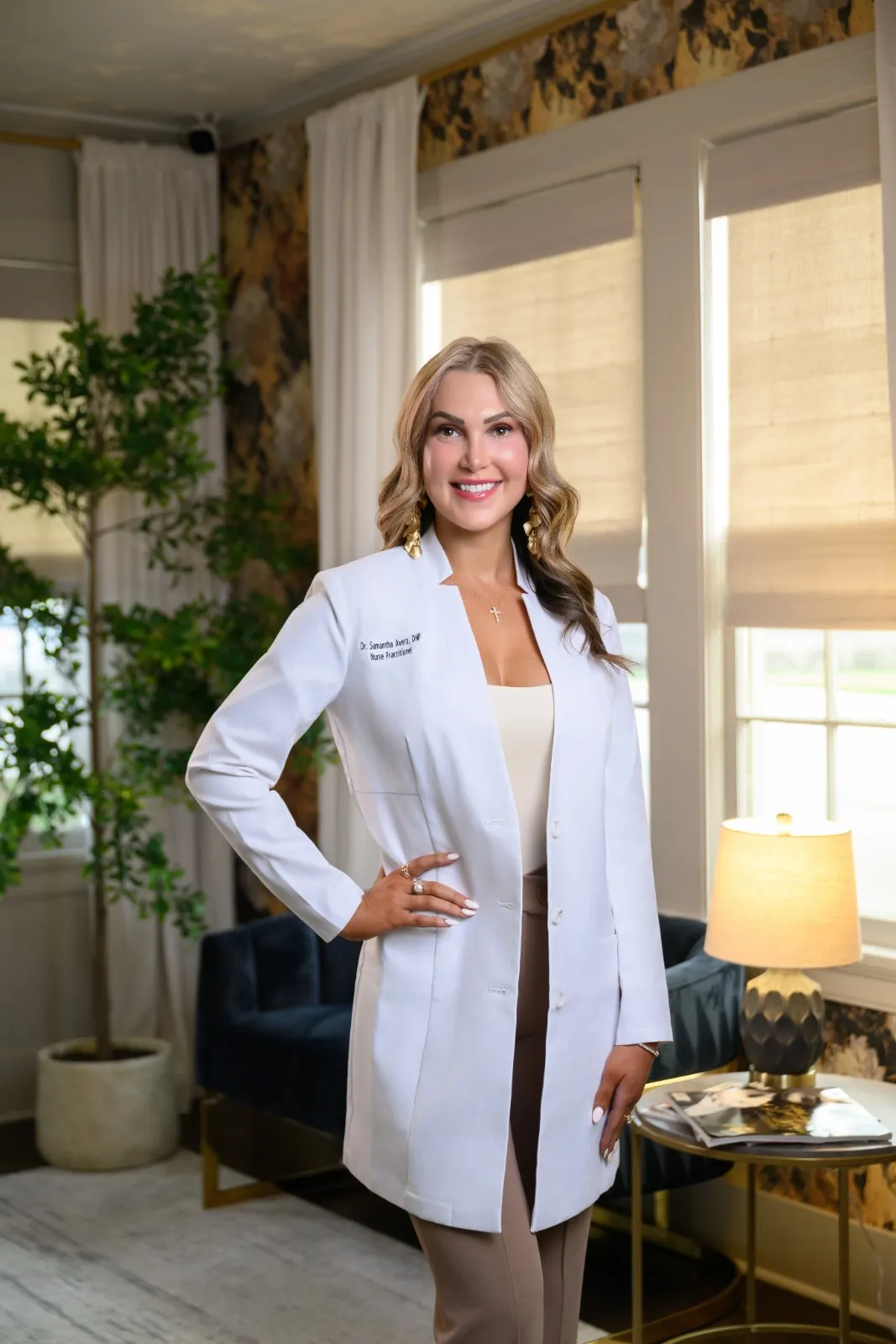
- Doctor of Nursing Practice, Board Certified, with subspecialty training in aesthetic and functional medicine
- 10+ years of clinical experience spanning critical care, dermatology, and luxury medical aesthetics
- Advanced specialization in laser and energy-based treatments, injectables, biostimulants, and PRP/PRF therapy
- Evidence-based, individualized treatment planning with deep respect for diverse skin tones
The Microneedling Experience at Coco
Skin rejuvenation at Coco is not a back-bar add-on. It’s a precision skin treatment delivered in a luxury environment, with every parameter, depth, pass number, and whether PDRN is indicated selected based on your skin analysis. The session itself is well tolerated; topical numbing is applied beforehand, and most patients describe the sensation as a manageable pressure rather than discomfort.
SkinPen® Microneedling
Precision micro-channeling with an FDA-cleared device.
Microneedling with PDRN
The same SkinPen® treatment, followed immediately by polydeoxyribonucleotide application into the open microchannels, supporting tissue repair and collagen synthesis at a depth that topical serums cannot reach on their own.
What to Expect
1
Your Consultation
Your skin concerns, tone, treatment history, and goals are reviewed before any session begins. Your aesthetician determines the appropriate depth and whether PDRN is indicated for your specific skin.
2
Your Treatment
Topical numbing is applied before the session. The SkinPen® delivers micro-channels across the treatment area at a calibrated depth. For PDRN sessions, the compound is applied immediately after the channels are open. Most sessions run 45 to 60 minutes.
3
Immediately After
Skin will appear pink to red — similar to a mild sunburn — and feel warm and tight. This typically resolves within 24 to 48 hours. Gentle skincare and sun avoidance are important in the first few days. Makeup can usually be applied within 24 hours.
4
Your Results
Initial improvement in texture and tone is visible within one to two weeks as the skin heals. Collagen remodeling continues for 4 to 6 weeks after each session, with the most significant change often apparent at the 6- to 8-week mark. Most patients do three to four sessions; series packages are available.
What Our Patients Are Saying

Samantha did an amazing job. She did exactly what we spoke about in my consult. It was a faster and less painful experience than I was expecting. Absolutely will recommend her to others!
I went today and saw Samantha. She is AMAZING and so good at what she does. She really listens to her patients and answers all the questions (I had A LOT!). Everyone at Coco is so very sweet and inviting! Thank you so much for a wonderful experience!
Frequently Asked Questions
Is it safe for all skin tones?
Yes, SkinPen® is appropriate for all skin tones, including Fitzpatrick types IV-VI. Unlike heat-based resurfacing devices, it does not target melanin in the surrounding skin, which significantly lowers the risk of post-inflammatory hyperpigmentation. This makes it one of the more genuinely inclusive treatment options in medical aesthetics.
How many sessions will I need?
Most patients begin with a series of 3 to 4 sessions spaced 4 to 6 weeks apart, with maintenance sessions once or twice annually. The number of sessions depends on the concern being treated. Mild textural issues or early fine lines typically respond in fewer sessions; more established acne scarring benefits from a full series and occasionally more.
When will I see results?
Initial improvement in texture and tone is visible within one to two weeks; collagen remodeling continues for four to six weeks after each session. The most significant change is often apparent at the six-to-eight-week mark after each session — which is why results from a series continue compounding over several months rather than appearing all at once. PDRN sessions often show faster initial improvement due to the added regenerative stimulus.
What is PDRN, and why does it help?
PDRN (polydeoxyribonucleotide) is a regenerative compound that promotes tissue repair, hydration, and collagen synthesis when delivered into the dermis. When applied after microneedling, PDRN penetrates deeper through micro-channels, enhancing the healing response and collagen production beyond what it can achieve alone. It’s especially effective for deeper scars and discoloration, and for those looking to optimize their treatment results.
Is there any downtime?
Most patients experience redness and mild skin sensitivity for 24 to 48 hours, after which they return to normal activities. The skin will feel warm and tight immediately after, similar to a mild sunburn. Gentle skincare, sun avoidance, and hydration are recommended for the first few days. Most patients can apply makeup within 24 hours. PDRN sessions may involve slightly more initial redness due to the added biological activity, which typically resolves at the same pace.
Can it be combined with other treatments?
Yes, it complements many of the other services at Coco and is frequently combined with PRX Derm Perfexion, injectables, and laser treatments as part of a broader skin plan. Your aesthetician and Samantha Avera’s team will discuss optimal sequencing when you’re receiving multiple services to ensure each treatment supports rather than competes with the others.
Ready for Skin That Actually Shows the Care You've Put Into It?
Microneedling works quietly and builds consistently, the kind of improvement that people notice without knowing why. Whether you’re starting with a single session or committing to a full series, the consultation is where you figure out what your skin actually needs and what a realistic plan looks like.
Coco Beauty Bar & Medical Spa · Baton Rouge, Louisiana.
Individual results vary. All treatments are performed in a medical spa setting under the supervision of Samantha Avera, DNP-BC.
Quality